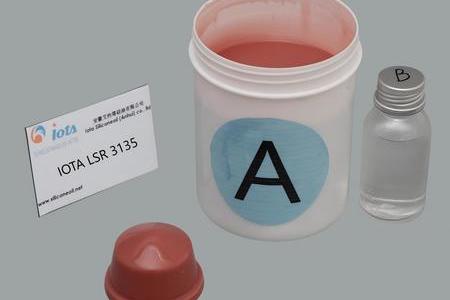
| Product Attribute | IOTA 3135 Series |
|---|---|
| Product Type | Liquid Silicone Rubber |
| Main Application | Pad Printing |
| Recommended Applications | Electronic components, mobile phone screens, circuit boards, chips, electronic toys, craft products and precision printing |
| Mixing Ratio | A = 1:10 by weight |
| Processing | Two-component mixing and molding |
| Curing | Room-temperature curing and elevated-temperature curing |
| Key Performance | Antistatic, good ink absorption and release, good elasticity |
| Printing Durability | Up to 100,000 printing cycles |
| Odor | Odorless according to product information |
| Solvent Requirement | Can absorb and release ink without solvent |
| Storage Temperature | At or below 32°C |
| Shelf Life |
12 months from the production date when stored in unopened original containers |
IOTA 3135 Series is a two-component liquid silicone rubber developed for pad printing applications.
Pad printing requires the silicone pad to transfer ink from an etched image or printing plate onto the target surface. The silicone material needs to provide a suitable combination of elasticity, ink pickup, ink release and surface performance to achieve consistent image transfer.
IOTA 3135 Series is designed for this type of printing process, particularly for electronic products and precision components where printing may involve small patterns, irregular surfaces or detailed images.
The material is suitable for applications including:
The silicone pad is one of the key components in a pad-printing process. Its surface needs to pick up the required amount of ink and then release the ink onto the target product with sufficient accuracy.
IOTA 3135 Series is designed around several requirements of pad printing:
IOTA 3135 Series is designed to provide antistatic performance and reduce the generation of static electricity on the silicone pad surface.
This characteristic can help reduce the attraction of dust during printing, which is particularly relevant to precision printing applications involving electronic products.
The silicone material can absorb and release printing ink without requiring a solvent according to the product specifications.
Good ink pickup and release are important because the silicone pad needs to transfer the printed image from the printing plate to the target surface.
IOTA 3135 Series is designed for pad printing applications requiring stable image transfer and durable printing performance.
The product information states that the printing performance can reach up to 100,000 printing cycles, depending on the actual printing conditions and process.
The silicone pad needs to deform when contacting the target surface and then recover its shape.
IOTA 3135 Series provides good elasticity, making it suitable for printing on electronic products and other products where the printing surface may be irregular or require controlled contact pressure.
The material is intended for applications such as electronic accessories, electronic toys, craft products, fine-detail electronic products, irregular images and badges.
This makes the 3135 Series suitable for pad-printing processes where the printing surface is not necessarily flat or where detailed patterns need to be transferred.
IOTA 3135 Series can be used for pad printing on electronic components where accurate image transfer and controlled contact with the product surface are required.
Typical applications include markings, patterns, symbols and decorative printing on electronic components.
The product is suitable for pad-printing applications involving mobile phone screens and related electronic components.
Its elasticity allows the silicone pad to make controlled contact with the printing surface while transferring the required image.
IOTA 3135 Series can be used for printing applications involving circuit boards, chips and other electronic components.
For these applications, antistatic performance and controlled ink transfer can be important considerations during material selection.
The material can also be used for pad printing on electronic toys and related products.
Pad printing allows manufacturers to transfer patterns, symbols and other graphics onto surfaces that may not be completely flat.
IOTA 3135 Series is suitable for pad printing on craft products, gift products and decorative components.
Its elasticity and image-transfer characteristics make it suitable for applications where printing needs to follow curved or irregular surfaces.
One of the important applications of pad printing is transferring images onto surfaces that are difficult to print using conventional flat printing methods.
The elasticity of the silicone pad allows it to adapt to different product geometries during the printing process.
The recommended mixing ratio for IOTA 3135 Series is:
Component A : Component B = 1 : 10 by weight.
Components A and B are filtered and de-aired before delivery according to the product information.
For production applications, meter-mix equipment that pumps, meters and mixes the two components without introducing air is recommended.
Accurate metering and uniform mixing are important for maintaining consistent material performance during production.
For production use, the following process should be considered:
Use the specified 1:10 weight ratio for Components A and B.
A suitable meter-mix system can be used to control the quantity of each component.
Automated metering can help improve consistency during continuous production.
The two components should be thoroughly mixed to obtain a uniform material.
The mixing process should minimize the incorporation of air.
If air bubbles are introduced during mixing, the mixed material should be thoroughly degassed under vacuum before use.
Air bubbles can affect the quality and consistency of the silicone pad and should therefore be controlled during processing.
IOTA 3135 Series can cure at room temperature and can also cure rapidly at elevated temperatures.
The actual curing time depends on factors including:
For this reason, the actual curing schedule should be established through process testing under the customer's production conditions.
Curing may be inhibited when the silicone comes into contact with certain materials.
The product information specifically identifies:
as materials that may inhibit curing.
Therefore, production equipment, molds, additives and contacting materials should be evaluated for compatibility before mass production.
When selecting liquid silicone rubber for pad printing, buyers should consider more than the material itself.
The following factors should be evaluated:
Identify whether the target product is:
The surface geometry affects the required behavior of the silicone pad during image transfer.
Consider:
These factors can influence the pad design and material selection.
For high-volume production, printing durability becomes an important consideration.
IOTA 3135 Series is stated to support up to 100,000 printing cycles, depending on the actual application and operating conditions.
For electronic components and precision products, static electricity can be an important process consideration.
An antistatic silicone material can help reduce static-related dust attraction on the silicone pad surface.
The customer should consider whether the production process requires:
The actual curing time should be validated according to pad thickness and curing temperature.
IOTA 3135 Series should be stored in its original unopened containers at or below 32°C.
The stated usable storage life is 12 months from the production date.
Products beyond the stated storage period may still be usable if they pass appropriate quality testing before production.
For best material management, buyers should:
IOTA 3135 Series is a liquid silicone rubber designed for pad printing. It is mainly used for printing on electronic components, mobile phone screens, circuit boards, chips, electronic toys, craft products and other precision or irregular surfaces.
The recommended mixing ratio is Component A : Component B = 1:10 by weight.
Yes. IOTA 3135 Series can cure at room temperature. It can also cure rapidly at elevated temperatures, with the actual curing time depending on product thickness and curing temperature.
The product information states that printing performance can reach up to 100,000 printing cycles, depending on the actual printing conditions.
Yes. The product is specifically described for applications including mobile phone screens, electronic components, chips, circuit boards and electronic toys.
Yes. Antistatic performance is one of the listed advantages of IOTA 3135 Series and is intended to help reduce static electricity and dust attraction on the silicone pad surface.
According to the product information, the silicone pad can absorb and release ink without solvent.
Components A and B should be mixed at a 1:10 weight ratio. Meter-mix equipment is recommended for production. If air is introduced during mixing, vacuum degassing should be performed.
Curing may be inhibited by contact with certain materials, including amines, sulfur and tin compounds.
The product should be stored in its original unopened containers at or below 32°C. The stated usable storage life is 12 months from the production date.
Yes. The product is intended for pad-printing applications involving irregular images and products with non-flat surfaces. Its elasticity allows the silicone pad to adapt to the target surface during printing.
Material selection should consider the printing surface, image geometry, ink system, printing frequency, static-control requirements, curing conditions and production equipment. For a specific application, testing under actual production conditions is recommended.
Before introducing IOTA 3135 Series into mass production, buyers should evaluate the material together with the complete pad-printing process.
Recommended evaluation items include:
The appropriate process parameters should be confirmed through application testing because actual performance can depend on the printing equipment, pad geometry, ink system, substrate, curing conditions and production environment.
If your application requires a different type of liquid silicone rubber, you can also explore other silicone material categories based on the required application.
For general silicone molding applications where specialized pad-printing performance is not required.
For applications involving food-contact or kitchenware-related silicone products, where applicable regulatory requirements need to be evaluated.
For applications requiring medical-grade silicone materials and appropriate regulatory documentation.
For silicone applications where bonding to a substrate is an important part of the manufacturing process.
For automotive components requiring application-specific silicone rubber performance.
IOTA 3135 Series is designed for pad-printing applications requiring antistatic performance, good ink absorption and release, elasticity and durable printing performance.
If you are developing a new pad-printing application or replacing an existing silicone material, provide the following information when requesting a technical recommendation:
This information can help determine whether IOTA 3135 Series is suitable for your application and what processing conditions should be evaluated.
Product: IOTA 3135 Series
Material: Liquid Silicone Rubber
Application: Pad Printing
Mixing Ratio: A = 1:10 by weight
Main Applications: Electronic components, mobile phone screens, circuit boards, chips, electronic toys, craft products and irregular-surface printing